
This article was originally published in Dutch in 2015 and has been translated and updated in October 2026.
If you want to lead, you have to look ahead. And if anyone does that every single day, it is trendwatcher Richard van Hooijdonk. Entrepreneurs would do well to take the following predictions seriously.
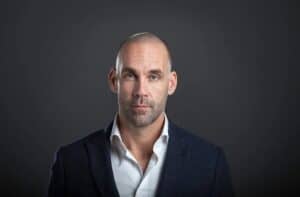
After holding management and innovation positions at DSB, Wegener, OHRA and Exact Software, Richard van Hooijdonk has increasingly focused on future forecasting. “It actually grew out of my previous roles, where I gave presentations that stirred up so much in the audience that I wanted to devote myself to it. I wanted to ‘move’ people: get them to think differently. The interaction with the audience, which can sometimes become very emotional, is what makes me love trendwatching and sharing it with others.”
SEE ALSO: According to Van Hooijdonk, ‘disrupting’ is the verb of the future (in Dutch)
The fact that emotions, mostly positive but sometimes negative, can run high has everything to do with the far-reaching disruption Van Hooijdonk shows his listeners. In his view, the world is going to change so drastically that some people in the audience are completely overwhelmed by it. “They fear for the future of their job or their business, for example, or they suddenly see big new opportunities. It prompts them to change the way they think and act, and some end up taking new career or business paths as a result.”
It is exactly the kind of talk the Dutch Chamber of Commerce wanted to put in front of its audience during the Week van de Ondernemer (Entrepreneurs’ Week) in 2015. Entrepreneurs, more than anyone, need to respond to change in time. So here are 10 of Van Hooijdonk’s predictions, several of which featured in his masterclass ‘Innovating with groundbreaking trends - seize your opportunity‘.
1. Human-like robots
“Robots will soon no longer be suited only to assembly-line work; before long we will see them in shops and at hospital bedsides. Next to your sickbed there will be a friendly-looking, even pleasant-smelling android that looks you in the eye. The robot automatically registers how you feel and what you need. It receives data from the electronic pill you swallowed, which monitors your body’s vital functions.”

2. Constant insight into your health
“More and more systems talk to each other and respond to each other. An electronic pill is also linked to your GP’s computer. Instead of you sitting in the waiting room, your GP has already called you before you even develop symptoms. On the other hand: if you knock back a few beers too many, your future health insurer will know about that too. The attractive premium you were able to secure thanks to the pill will then shoot up.”
3. Smart connections with wearables
“Almost everyone already has a smartphone that shows notifications when news comes in or someone sends you a message. Linked to a device, smartphones can even show you your blood sugar level. Once the Apple Watch or another smartwatch catches on, people will carry many more sensors that measure all sorts of things, such as your heart rate and how much energy you burn. We will also need to spend less and less time on simple tasks. Think of the milk in your fridge. Keeping an eye on whether it is nearly finished or past its use-by date will soon be done for you by a device. As will ordering a new carton.”

4. Predictions based on data
“We use more and more devices that together collect an enormous amount of data. You can use that to make predictions, for example about the weather or about traffic congestion ahead. That way you can determine fairly accurately in advance how many buses you need to run. Do sensors detect fine weather? Then all the benches in the city automatically fold out. And they disappear again during rush hour, because the sensors notice that more space is needed for the large number of people on the move at that moment.
5. A personal digital vault
As the amount of available data grows, the call for privacy will naturally get louder. Citizens will want tighter control over which data goes to their insurer, what their spouse is allowed to see and what no one at all may know. A digital vault will meet that need. I understand that the Dutch Land Registry (Kadaster) is already discussing this with the notarial profession.”

6. Traditional business models will largely disappear
We are moving more and more towards different forms of internet subscriptions and payments directly between citizens. Think of how the internet and apps such as Spotify have turned the music industry completely upside down, and of the impact of initiatives such as Airbnb and Uber.
7. Traditional factories will disappear
“Look at the possibilities 3D printers are already creating. Eventually, various types of 3D printing machines will become available at a lower price and to more people. If a part of your car breaks, it will no longer have to be ordered from a faraway country where a factory runs mass production. Instead it will be: ‘No problem, we’ll just print that part for you.’ And on top of that come the possibilities of 4D printers.”
8. Little demand for low-skilled workers
Robots and algorithms will make the work of low-skilled people redundant. According to Van Hooijdonk in 2015, that group made up around a quarter of the European population, and we need to find ways to compensate for that. One option is to share the prosperity we create with them, without conditions. For example, by introducing a standard basic income for every citizen.”

9. Organisations will become ‘lean’
Thanks to the huge availability and growth of apps, consumers can switch and tweak to their heart’s content. Today I travel with Dutch Railways, tomorrow I’d rather take an Uber, and the day after there’s a new app I think is worth trying. Companies can only deal with that fickleness by becoming more flexible. Responding quickly and adapting is vital. A company of a thousand people splits into 10 organisations of 100. And those in turn into units of 10. Only with small groups can you manoeuvre quickly.”
10. Governments will experiment more
The smart governments, that is. Government, traditionally known as a sluggish institution, cannot sit back and watch. They will only keep up if they set up test beds with local and international companies, where they test and develop applications around big data, 3D printing, the internet of things and m-commerce. They should select a few municipalities and give people there the freedom to truly innovate.”
In his presentation, Van Hooijdonk also discussed the consequences of these predictions. Optimisation and innovation take on a different meaning, a more disruptive mindset is required and steering purely on profit no longer makes sense. To achieve this, he argues among other things for more collaboration between entrepreneurs. His full message was presented during the 2015 Week van de Ondernemer.
Source: De Telegraaf (in Dutch)