


This article was originally published in Dutch in 2015 and has been translated and updated in October 2026.
Text: Alfred Monterie
Source: De Telegraaf (Dutch daily newspaper)
An arsenal of advanced technology is available in the fight against terrorism. The downside, however, is that terrorist groups such as IS reach for exactly the same tools. Being more agile and having shorter chains of command, they have the upper hand.
Trendwatcher Richard van Hooijdonk, who at the time worked with various Dutch and international security services, finds it a real headache. “Slowness, bureaucracy and a lack of cooperation, including at international level, are holding them back. Junior officers and civil servants, who often have more technological know-how, are not heard by their superiors. On top of that, national governments know very little about the exponential changes that lie ahead of us.”
Unfortunately, terrorist groups move faster. “Almost every IS fighter uses digital technology. The internet in particular forms the backbone of IS and is the foundation of the terrorists’ operations,” says Van Hooijdonk. According to him, IS was, at the time, very advanced in methods of encrypting communication. “They can stay in touch via the internet without being seen. In the game of cat and mouse with Western intelligence services, they are ahead.” Drones are used by both sides. These unmanned aircraft have taken out many a terrorist. In the wrong hands, however, they can also carry explosive payloads and cause disasters. Terrorist organisations such as Al-Qaeda are actively exploring the possibilities, writes security expert Marc Goodman in his book Future Crimes.
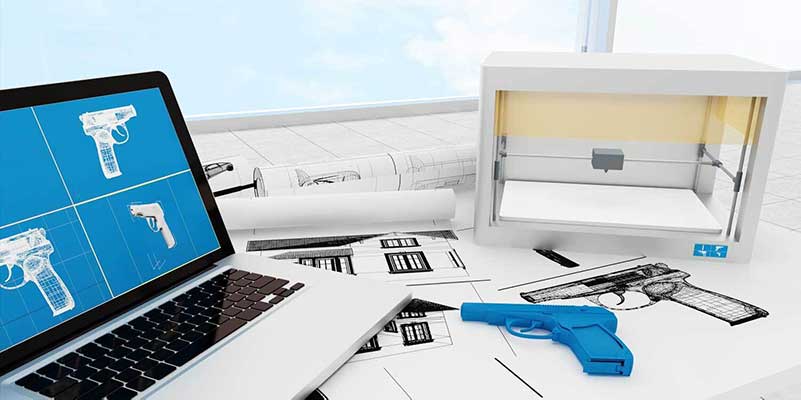
Robots have caught their attention too. Jihadists would then no longer need to die as martyrs, but could leave their destructive work to these remote-controlled machines. In 2011, the FBI foiled a plan to attack the Pentagon and Capitol Hill using drones packed with explosives. An American of Bangladeshi origin was convicted for the plot. The deadly robots we know from films such as The Terminator, Blade Runner and RoboCop are becoming reality. 3D printing poses a threat as well. At the time of writing, the FBI was investigating how terrorists could use such printers to make car bombs. An arms embargo makes little sense when criminals can easily produce all kinds of weapons on 3D printers. The blueprints are available online.
Facial recognition is another technology that both sides can take advantage of. Security cameras can compare video footage of crowds with photos of suspects. Identification based on physical characteristics offers counter-terrorism forces enormous possibilities. Van Hooijdonk: “The technology is available. But adoption is slow. What’s more, international cooperation is lacking. That is a real thorn in the side of the security services.” Another ally in the fight against terror is the sniffer sensor. A European consortium that includes the Dutch research organisation TNO has developed a system to detect bomb makers and explosives from the outside.
Advanced sensors can detect elevated concentrations of certain chemicals in the air. When suspicious quantities are found, smart software checks whether those substances could be combined to make a bomb. This can help locate places where bombs are being built. Hate groups are increasingly using social media and YouTube to recruit new members. Van Hooijdonk: “Terrorists also make extensive use of the ‘deep web’. They access it through a network on which they can remain anonymous. Besides illegal arms trading, you’ll find jihadi forums there that are breeding grounds for extremism.”
Attacking critical infrastructure is also high on the terrorists’ agenda. In 2015, the then British Chancellor of the Exchequer, George Osborne, warned that groups such as IS would soon be able to cripple utilities, hospitals and air traffic control, with all the catastrophic consequences that would entail.
Read also: The terrorism of the future is a digital war - part 1 (in Dutch)